Cellular Asset Tracker Platform
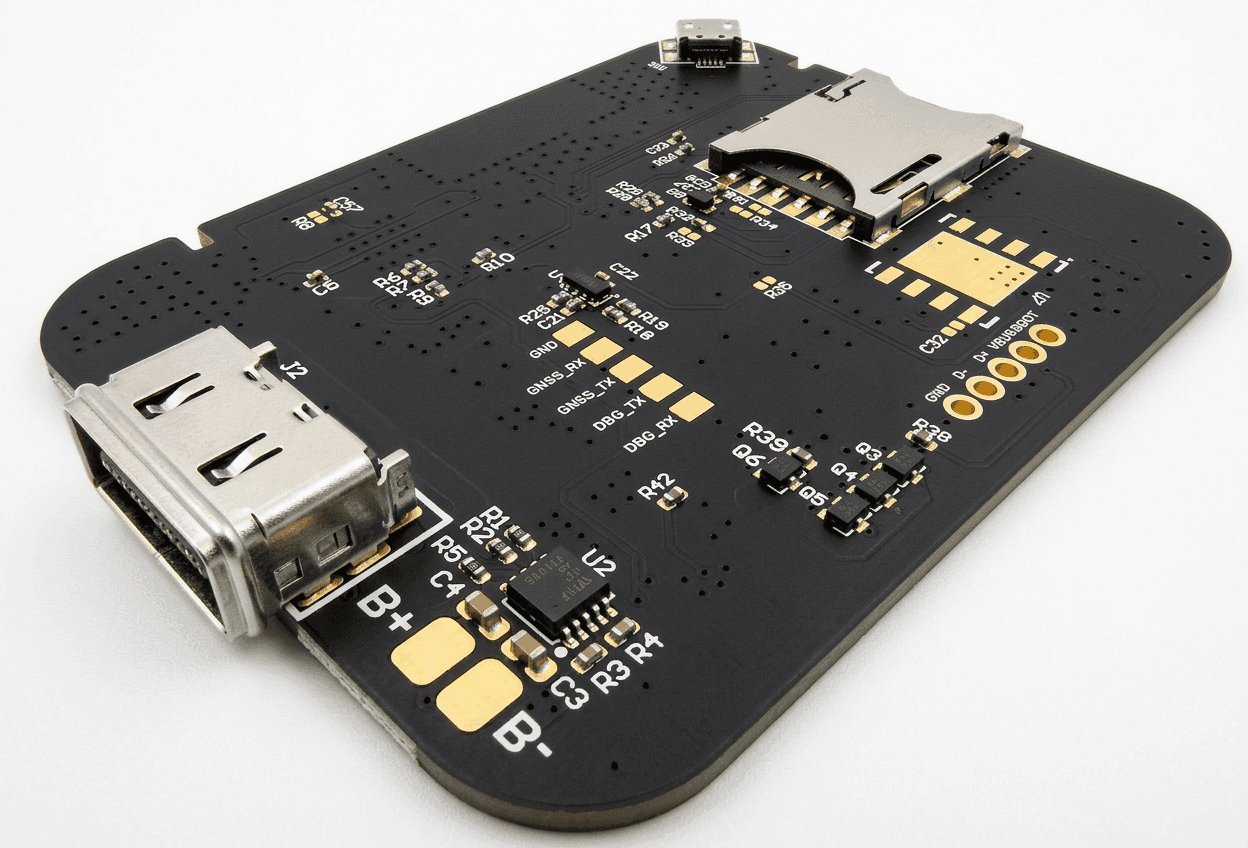
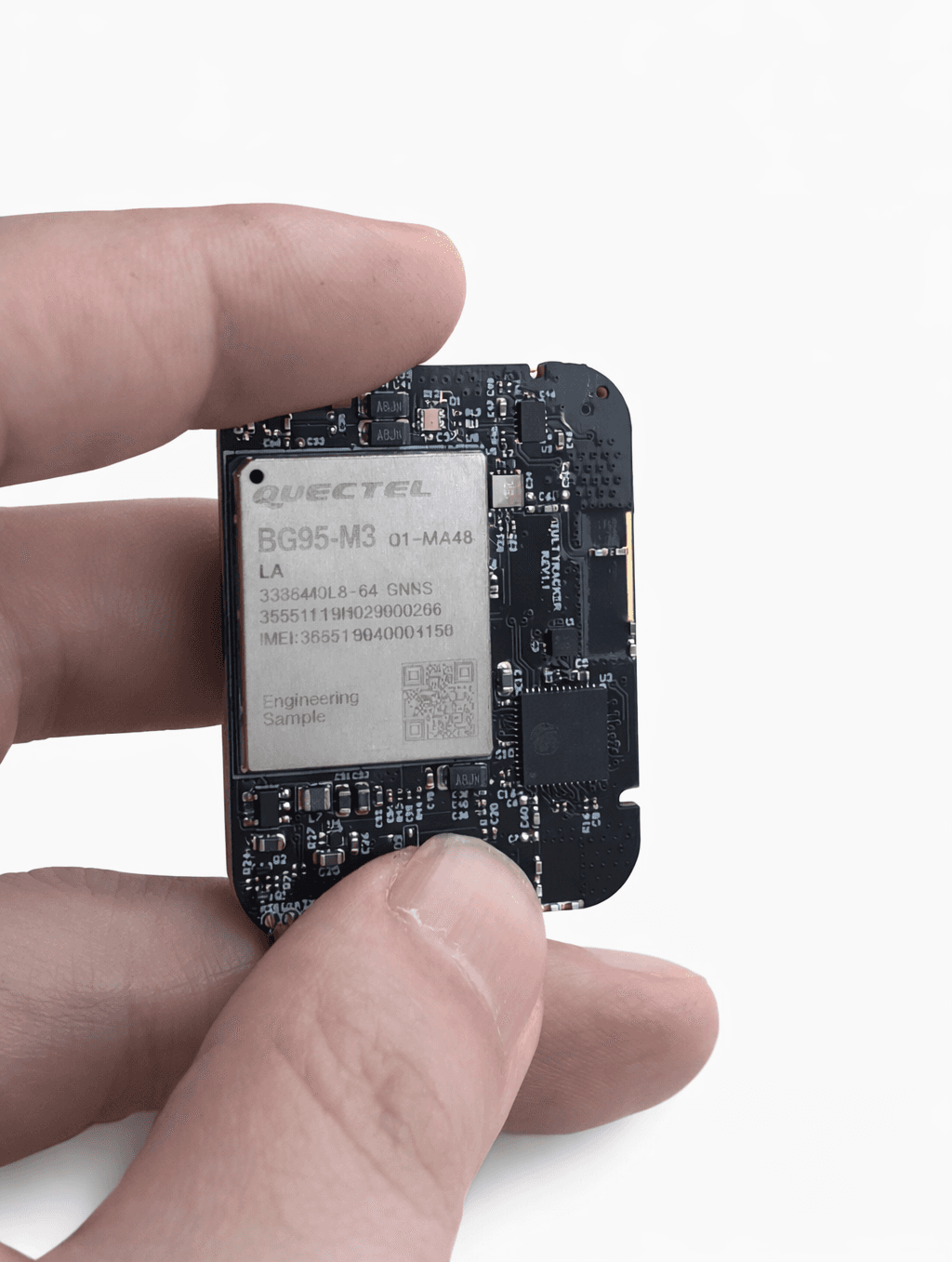
A highly integrated asset tracking platform designed within a 40mm by 30mm footprint, combining cellular connectivity, GNSS positioning, short range wireless, motion sensing, and battery management into a single embedded system.
Year
02.25
Scope
Embedded Systems, RF Design, Cellular IoT, GNSS, Sensor Integration, Compact Hardware Design
Timeline
9 weeks
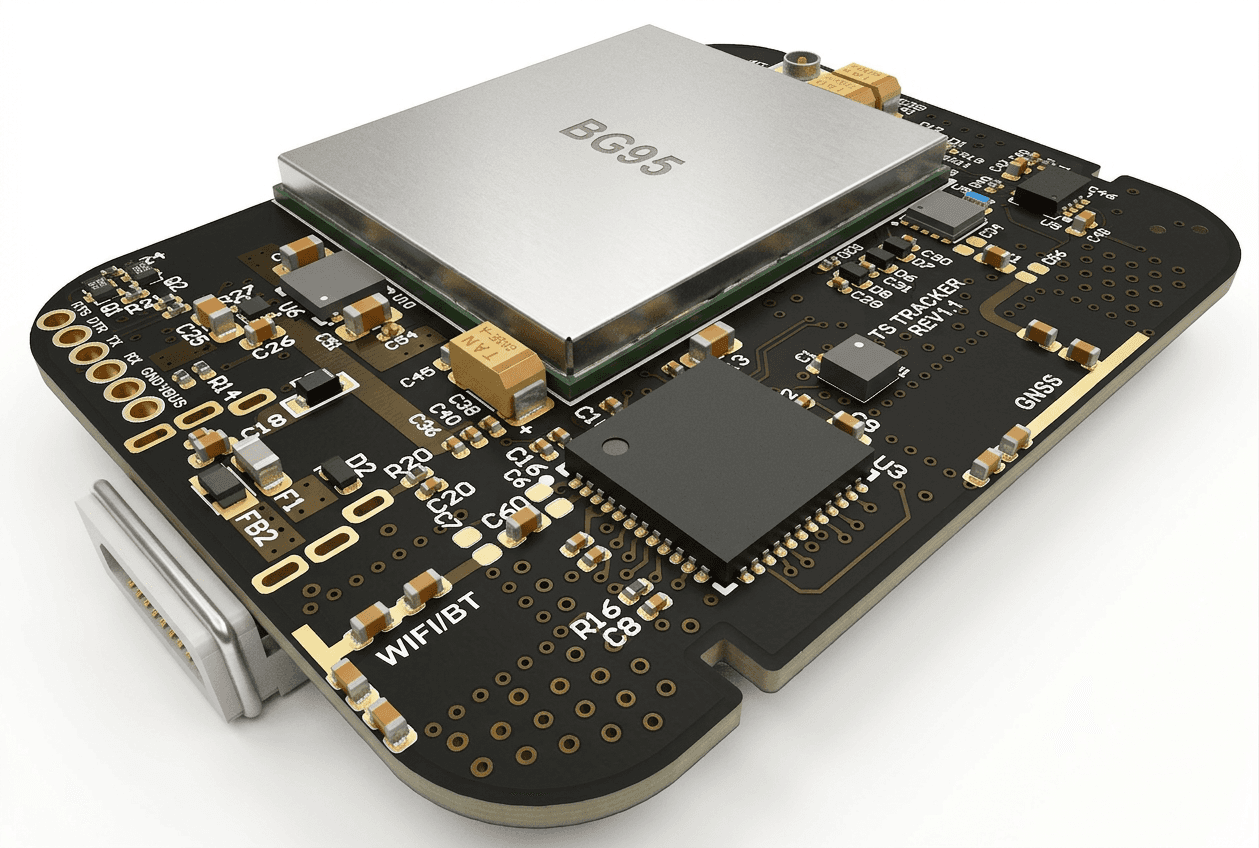
Cellular, GNSS, WiFi, Bluetooth, motion sensing, and LiPo power system in a 40mm by 30mm platform
This project focused on the design of an ultra compact asset tracking device that integrates global connectivity, positioning, sensing, and power management into a single deployable system. At the core of the platform is a dual processor architecture combining the BG95 cellular module with an ESP32, enabling efficient handling of connectivity, control, and local processing. The system supports both Nano SIM and eSIM configurations, providing flexibility across deployment environments. Positioning is achieved through GNSS with a dedicated RF front end including low noise amplification and impedance matching, ensuring reliable performance within a constrained form factor. WiFi and Bluetooth are implemented through onboard antennas carefully tuned within the PCB layout. Cellular connectivity is enabled using a custom flex antenna routed around the enclosure, maximizing radiation efficiency while preserving PCB space inside an IP67 plastic housing. The platform integrates a 9 axis motion sensing system, enabling detection of movement, orientation, and activity. This allows the device to provide not only location but also behavioral insight of the tracked asset. Power architecture is designed for portable operation using a single cell LiPo battery. The system includes an integrated battery charging circuit with USB input, regulated supply rails, and controlled load switching for the cellular domain. Power sequencing is managed through a dedicated push button controller, ensuring reliable startup and shutdown behavior. An RGB LED provides clear user feedback for system states such as connectivity, charging, and activity. The overall design balances RF performance, power efficiency, and mechanical constraints to deliver a compact, production ready tracking platform.